
Department of Biology · University of Fribourg
How plants recognise bacteria
We work on the cell-surface immune receptors that let a plant detect a microbe, and on what bacteria do about it.
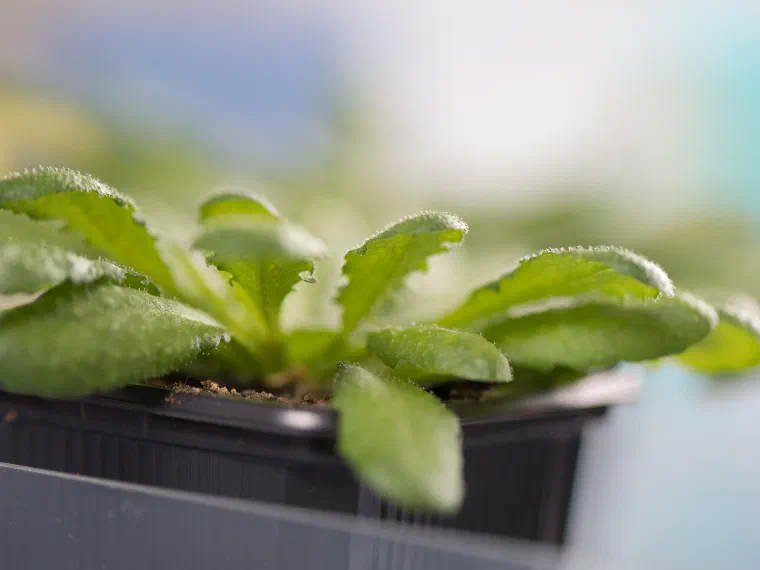
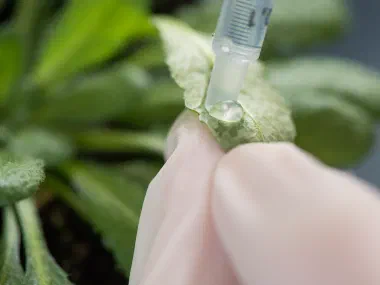
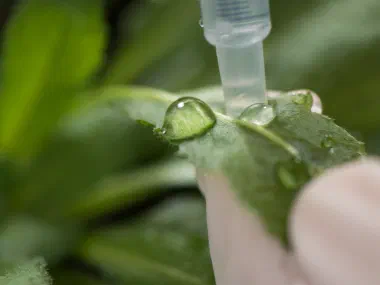
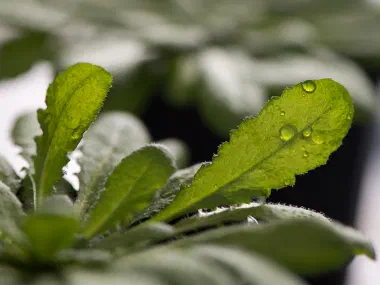
Who we are
We study how plants sense bacteria, and how bacteria live with plants. The group belongs to the Department of Biology at the University of Fribourg and is led by Stefanie Ranf, Full Professor of Plant Sciences.
What we work on
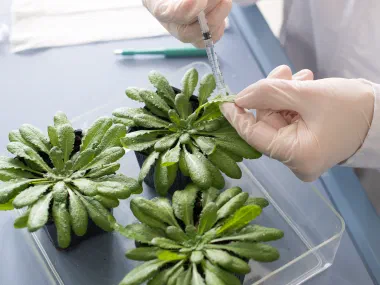
Plants lack wandering immune cells and antibodies. They identify a microbe via its molecules, using receptors positioned on the surface of almost every plant cell. We work on one such receptor, the receptor kinase LORE, which detects medium chain 3-hydroxy fatty acids from the outer membrane of Gram negative bacteria. We want to know how that recognition works at the molecular level, what the plant does with the signal, and how a bacterium adapts to living on a host that can see it.
Latest publications
-
The plant immune receptor LORE binds agonistic and antagonistic 3-hydroxy fatty acid ligands via a dynamic loop in its G-type lectin domain
-
Diversification of ligand preference in conserved Brassicaceae LORE immune receptors matches proteobacterial 3-hydroxy fatty acid profiles
-
Membrane remodelling mediates lipopeptide-induced immunity in Arabidopsis
-
Plant-Based Ligand-Depletion Binding Assay for Assessing Pattern Recognition Receptor-Ligand Interactions
All publications and conference contributions
Join our team!
Do you have an interest in plant science and microbial biology? We are always glad to hear from motivated PhD and postdoc candidates, and we are happy to work with you on an application for external funding. Our job opportunities page says what is open at the moment.
Latest news
All news-
Olga Thiry defends her Master thesis and stays on for a doctorate
students
-
Congratulations to Laurent Philippoz on his Bachelor thesis
students
-
Stefanie speaks at the CUSO retreat on plant membrane signalling
presentation
-
New preprint on how the lectin domain of LORE binds its fatty acid ligands
papers
-
New preprint on the ligand preference of LORE receptors across the Brassicaceae
papers
-
Our work on lipopeptide induced immunity has appeared in Nature Plants
papers